
 Jul 27, 2026
 SILVERANLAGE
 GOLDANLAGE
Tags -
GOLDANLAGE
Tags -
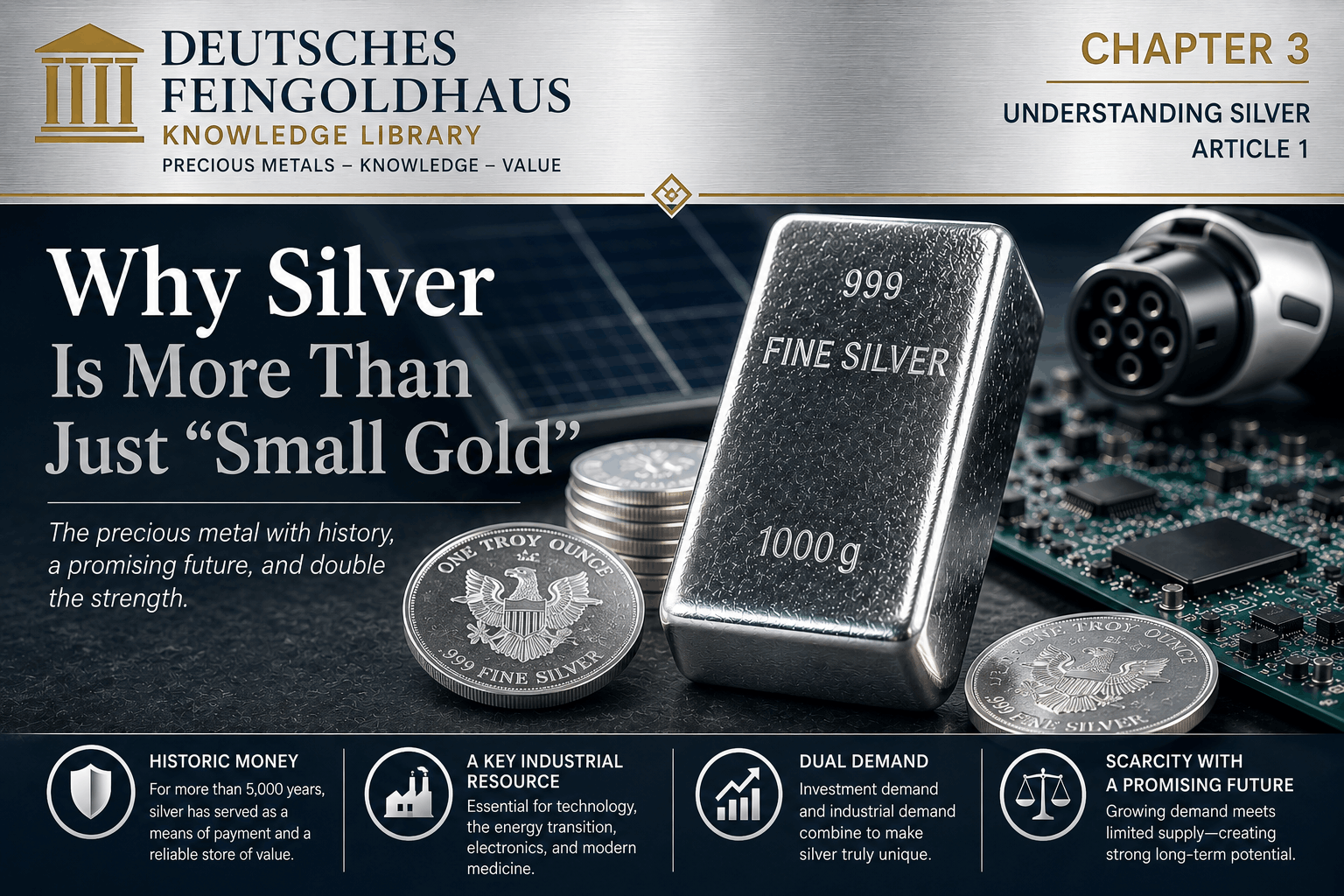
When people think of precious metals, gold is usually the first that comes to mind. Silver, on the other hand, is often viewed merely as gold’s “little brother.” In reality, silver has an equally remarkable history as a monetary metal while also playing a crucial role in modern industry. This dual role makes silver a distinct asset class and one of the most fascinating precious metals of our time.
Gold and silver have accompanied humanity for thousands of years. Gold was primarily the metal of rulers, governments, and great wealth. Silver, however, served as the money of everyday life. Merchants, craftsmen, and families used silver coins for daily transactions. Today, this historical significance is often underestimated.
Silver has the highest electrical conductivity of any metal, along with outstanding thermal conductivity and reflective properties. As a result, it is an essential component of solar panels, electric vehicles, smartphones, computers, semiconductors, medical technology, and numerous other future-oriented technologies. Many modern innovations would hardly be possible without silver.
Silver is demanded by both investors and industry. When the global economy grows, industrial demand for silver typically increases. During economic downturns, however, this demand may decline. This dual demand explains why silver experiences significantly greater price fluctuations than gold.
The silver market is considerably smaller than the gold market. Even relatively small changes in supply or demand can have a significant impact on silver prices. Unlike gold, silver is permanently consumed in many industrial applications and is often difficult or uneconomical to recycle.
Silver helps preserve purchasing power over the long term while also benefiting from major global trends such as digitalization, the energy transition, and electric mobility. Many investors consider silver a valuable complement to gold in a diversified investment portfolio.
Historically, the mining ratio of gold to silver was often around 1:15. Today, the Gold-to-Silver Ratio in financial markets sometimes exceeds 1:80. Many investors use this ratio as a benchmark for evaluating the relative value of the two precious metals.
Silver is far more than just “small gold.” Its unique combination of being both a monetary metal and an industrial metal makes it a distinctive asset class. Anyone taking a comprehensive approach to precious metal investing should view silver not merely as a supplement to gold, but as an essential component of a long-term wealth preservation strategy.
Sign up today and you will be contacted by one of our experts.

Deutsches Feingoldhaus is your trusted destination for buying and selling gold bars, gold coins, silver, platinum, and palladium in Germany. We offer certified precious metals, transparent pricing, secure online ordering, and expert guidance to help you invest with confidence. Whether you're a first-time buyer or an experienced investor, we provide reliable service and quality products for long-term wealth protection.



 Login
Login Register