
 May 26, 2026
 Emas Technology
 GOLDANLAGE
Tags -
Gold
Silver
Platinum
Palladium
Precious Metals Investment
GOLDANLAGE
Tags -
Gold
Silver
Platinum
Palladium
Precious Metals Investment
Scarcity and real substance as foundation
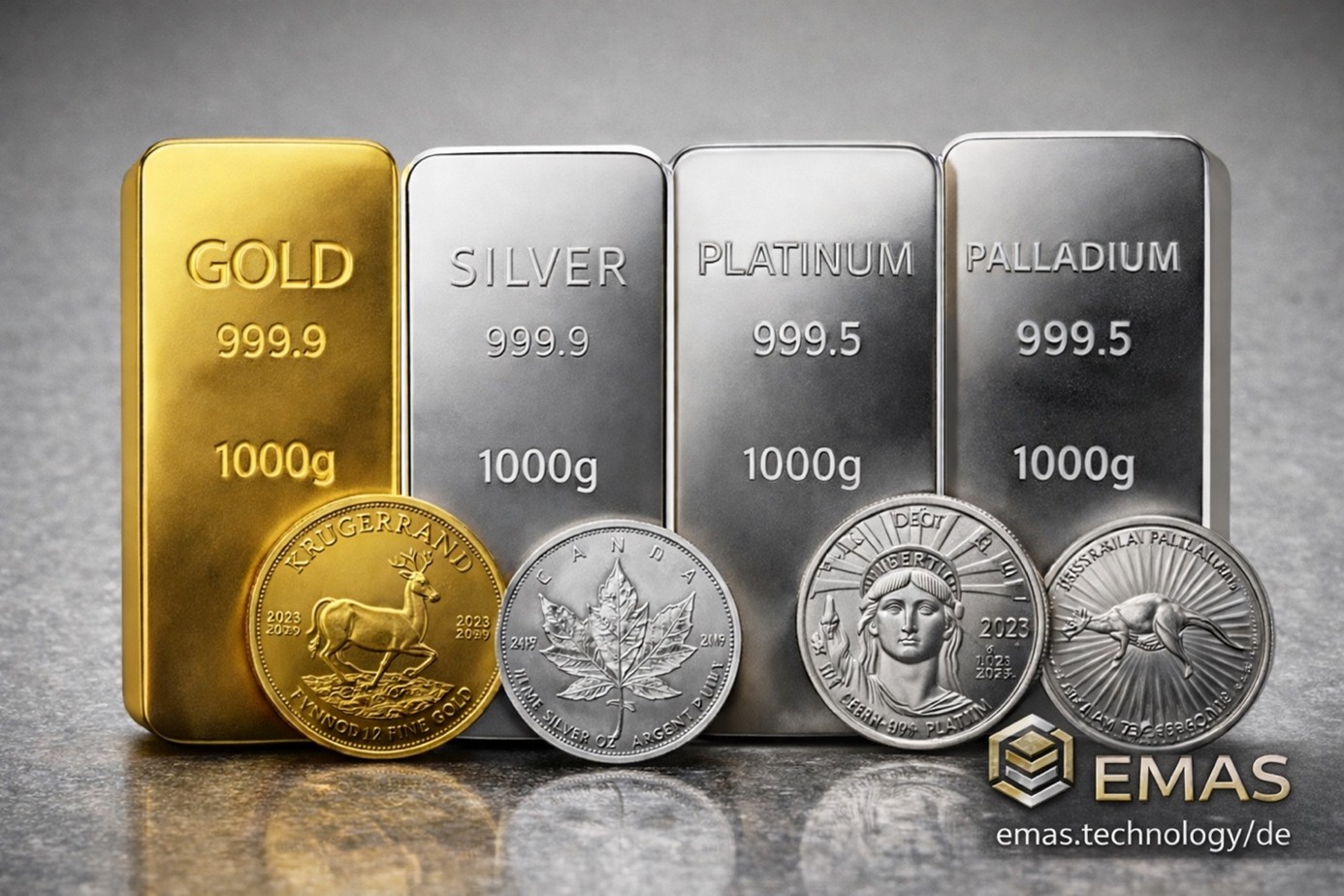
All four metals have their natural limitlessness in common. Promotion is capital intensive, new productions are rare, production expansions last years. This scarcity differentiates the precious metal base from fiat money, the quantity of which can be politically extracted. For investors this means: Precious metals have a physical value base that is not eroded by money policy measures. As real assets they exist independent of the creditworthiness of a debtor and carry no counterparty risk – a central advantage compared to real financial instruments.
Protection function in times of inflation and loss of trust
Another common feature is the role of precious metals as a hedge against loss of purchasing power . When real commodities are low or negative, investments lose attractiveness. Precious metals, although they do not offer ongoing returns, may retain purchasing power over longer periods of time. Gold and silver are traditionally considered monetary metals, while platinum and palladium are additionally strongly influenced by industrial demand. In sum, all four benefit from an environment in which confidence in currencies diminishes and real values gain importance.
Diversification by different price drivers
Although they belong to the same alloy class, the metals react to different impulses:
These different sources of demand lead to price trends not always moving parallel. For investors, a combination of the four metals can improve risk appetite and strengthen the overall portfolio.
High Liquidity and Worldwide Acceptance
Precious metals are globally tradable and easily valued in standardized forms (barren, investment coins). This creates transparency and liquidity. Compared to many other precious metals, precious metals are relatively uncomplicated to buy, store and sell – a practical advantage for investors who value flexibility.
Digital usage with physical coverage (EMAS-Technology)
In addition to the classical physical acquisitions, digital utility concepts gain real meaning . All four precious metals – Gold, Silver, Platin and Palladium – can be used as means of payment via the EMAS-Technology-App and simultaneously acquired the physical underlying. This creates a bridge between the modern payment infrastructure and the classical digital currency system: Digital availability (transparency, easy transfer) meets the security of real existing metals in the background. For investors who want to not only hold precious metals, but also place them flexibly, a physically covered digital solution can offer additional benefits. Further information is provided by the vendor under emas.technology/de bereit.
Long-term character rather than short-term speculation
Despite all the advantages it remains true: Precious metals are not a guarantee for stable course gains. Especially silver, platinum and palladium can fluctuate strongly. Its strength lies in its stabilizing function within a long-term wealth strategy – as a counterweight to monetary and cyclical investments. When precious metals are used strategically, they are used as insurance against inflation, systemic risks and extreme market conditions.
Gold, silver, platinum and palladium share central investment properties: scarcity, physical substance, global tradability and a protection function against currency valuation. At the same time, different price drivers arise for diversification within the investment class. Thanks to modern, physically covered digital usage concepts such as EMAS, a wider instrumentarium is created for the user – from classical storage to flexible use. As strategic building blocks, the four precious metals can contribute to the stabilization and protection of overall wealth.
Sign up today and you will be contacted by one of our experts.
Deutsches Feingoldhaus is your trusted destination for buying and selling gold bars, gold coins, silver, platinum, and palladium in Germany. We offer certified precious metals, transparent pricing, secure online ordering, and expert guidance to help you invest with confidence. Whether you're a first-time buyer or an experienced investor, we provide reliable service and quality products for long-term wealth protection.



 Login
Login Register