
 Jun 27, 2026
 GOLDANLAGE
 GOLDANLAGE
Tags -
Bitcoin
Gold Investment
Cryptocurrency
Investment Strategy
GOLDANLAGE
Tags -
Bitcoin
Gold Investment
Cryptocurrency
Investment Strategy
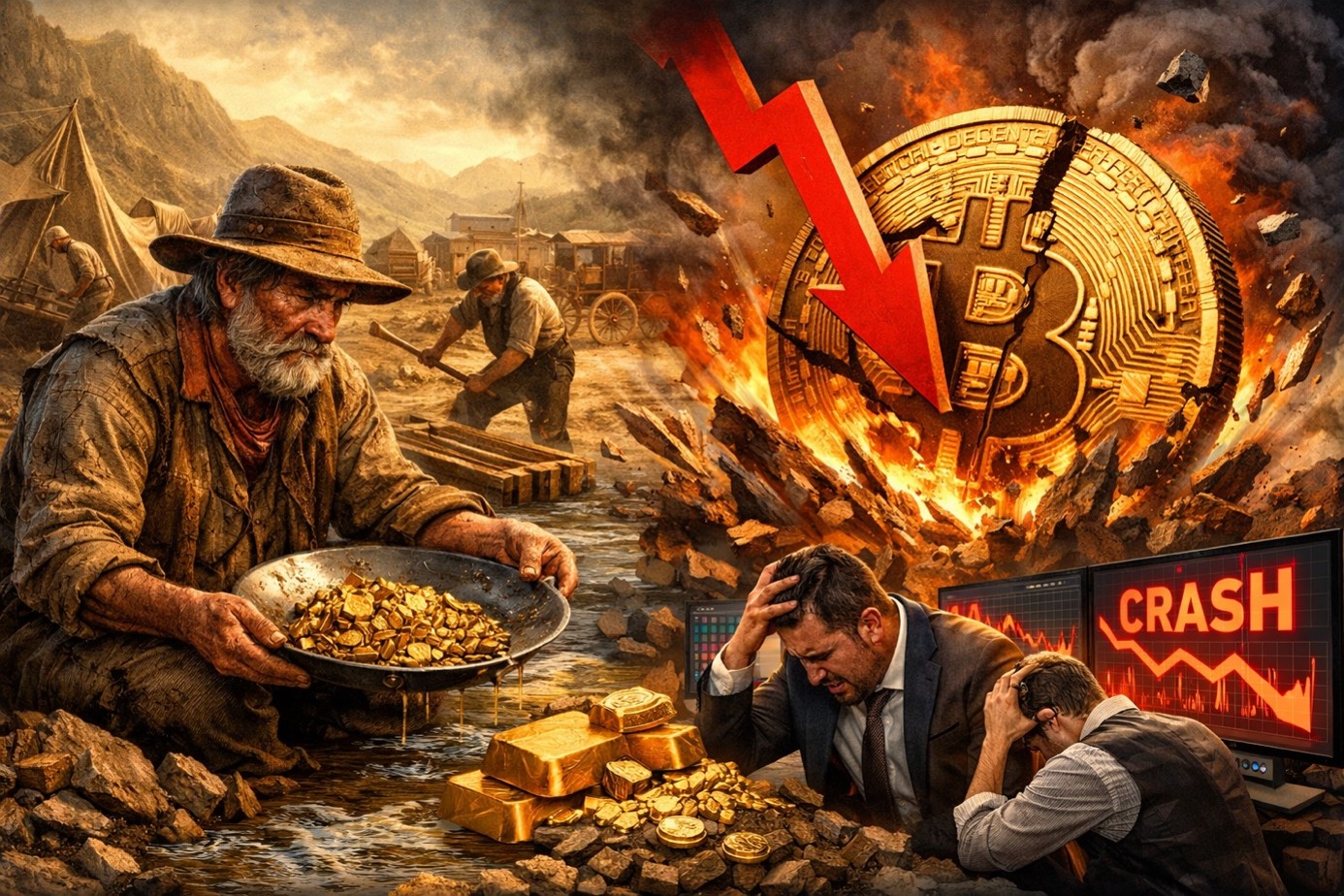
It is an image that has reappeared time and again in recent years: on one side, euphoric headlines about new all-time highs for Bitcoin; on the other, panicked news of massive price crashes, liquidations, and shattered hopes. Digital assets promise freedom, independence, and high returns. Yet, these very promises are put to a harsh test during market crashes. Whenever prices collapse, a familiar pattern emerges: trust in the digital crumbles—and focus shifts back to something very real. To gold.
The historical gold rush was loud, dirty, and driven by a thirst for adventure. People risked their lives to sift for gold nuggets in rivers. Today's gold rush is quieter but no less intense. It takes place in bank branches, at precious metal dealers, and in the minds of investors. Those who choose physical gold today do not do so out of romantic idealization, but out of a deep-seated need for stability.
The Psychology Behind the Bitcoin Crash
Cryptocurrencies are more than just a financial product—they are a promise. The promise of building wealth independently of the traditional financial system. This narrative is particularly attractive in times when trust in banks, governments, and currencies is waning. However, Bitcoin is no calm haven. Its prices fluctuate wildly. One day brings euphoria, the next brings fear.
Many investors buy in during phases when "everyone is talking about it." Social networks are filled with success stories, price predictions, and the fear of missing out (FOMO). This dynamic creates bubbles—and bubbles burst. When a Bitcoin crash occurs, it impacts not just the portfolio, but also the psyche. The feeling of control vanishes, and doubts take root. Suddenly, the digital world feels incredibly fragile.
Gold as an Emotional Counterweight
In moments like these, gold feels almost archaic. It is heavy, cool, and tangible. You can hold it in your hand, store it in a vault, and see it. This physical presence builds trust. While digital assets rely on code, networks, and widespread adoption, gold exists independently of them all.
In uncertain times, people search for anchors. Gold serves as such an anchor. Not because it promises spectacular returns, but because it conveys stability. Its price fluctuates, yes—but never with the brutality and speed that many have come to know from cryptocurrencies. Gold represents permanence in a world that is changing faster and faster.
The New Gold Rush Is Quiet but Sustainable
The modern gold rush does not manifest in overcrowded mining camps, but rather in an increasing demand for coins and bars. Many individuals are beginning to move a portion of their wealth out of the digital space and into something physical. This is not driven by technophobia, but by risk awareness.
Ultimately, it is less about "gold instead of Bitcoin" and more about balance. Anyone who has experienced how quickly digital assets can lose double- or triple-digit value understands the appeal of a tangible asset that has served as a store of value for thousands of years. Gold is not a trend. It is a constant in the history of money.
Reality Trumps Promises
Bitcoin stands for innovation, for a new concept of money. Yet, ideas must prove themselves—especially during crises. Gold passed these trials long ago. It has survived currency reforms, wars, financial crises, and political upheavals. This historical track record fosters a deep trust that no whitepaper can replicate.
Paradoxically, in an increasingly digital world, the longing for something simple grows. Something you can understand without needing an explanation. Gold requires no app, no update, and no password. It just exists. And it is precisely this "just being there" that gives many people a sense of security in uncertain times.
Conclusion
The contrast between the gold rush and the Bitcoin crash is more than just a comparison of two asset classes. It reflects two fundamental human needs: the desire for growth and the desire for security. Cryptocurrencies cater to the dream of rapid advancement, while gold embodies the concept of permanence. In phases where digital promises begin to waver, trust returns to what is real. Not loudly, not spectacularly—but sustainably.
Sign up today and you will be contacted by one of our experts.

Deutsches Feingoldhaus is your trusted destination for buying and selling gold bars, gold coins, silver, platinum, and palladium in Germany. We offer certified precious metals, transparent pricing, secure online ordering, and expert guidance to help you invest with confidence. Whether you're a first-time buyer or an experienced investor, we provide reliable service and quality products for long-term wealth protection.



 Login
Login Register